by C L Nandi (Area Director 20)
WEST LONDON SPEAKERS CELEBRATES 20 years
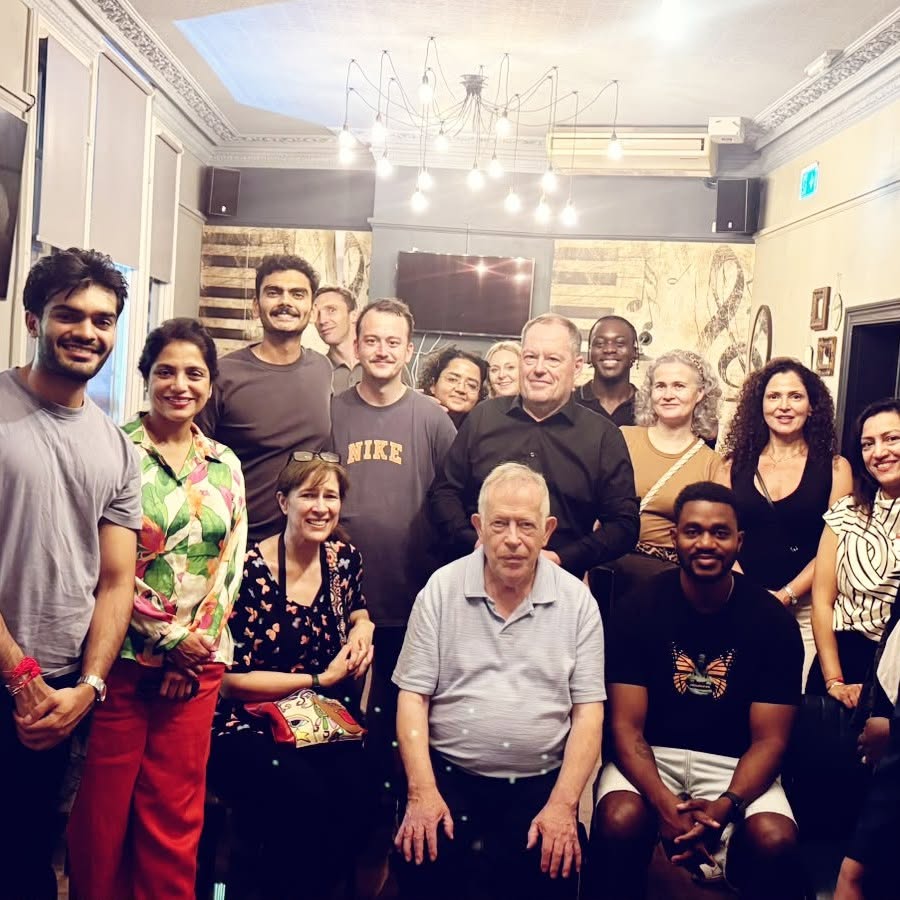
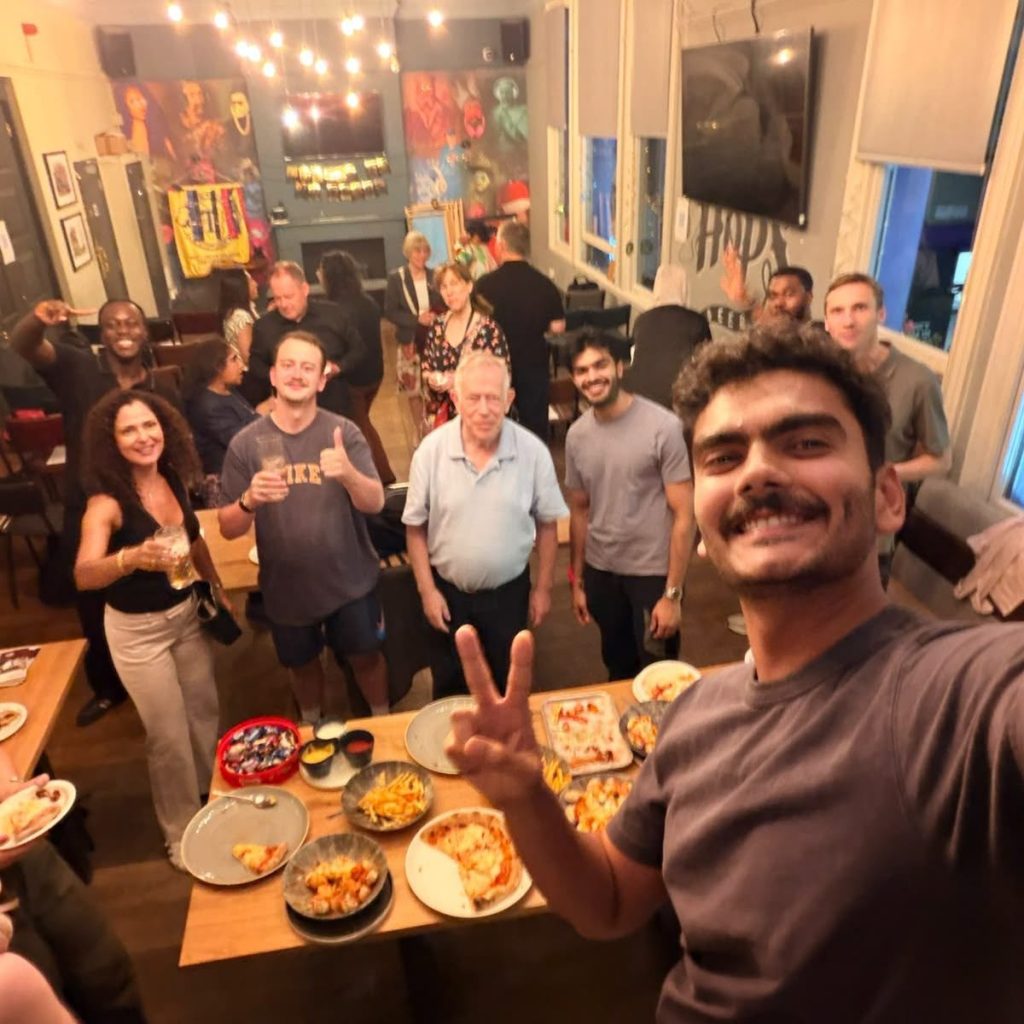
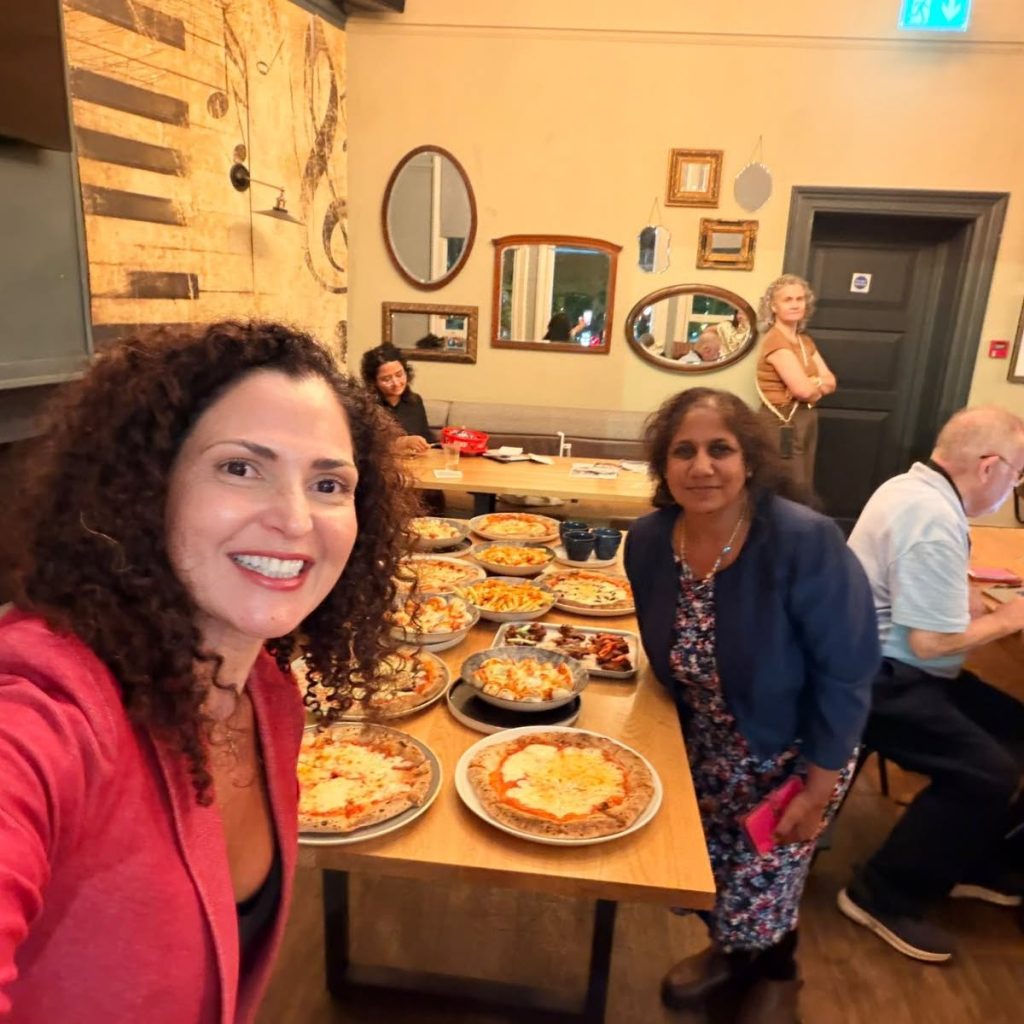
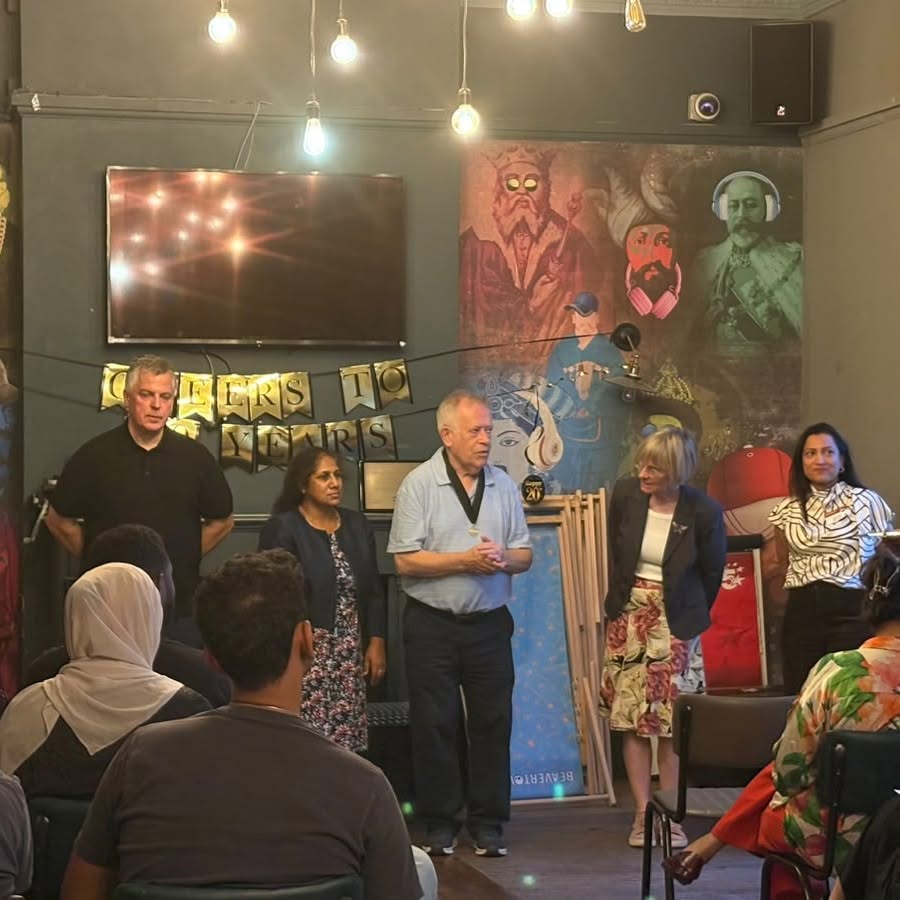
Monday 7th September 2026 was an incredibly special evening for West London Speakers. We were celebrating our 20th birthday in a beautiful meeting room in Hammersmith, London.
Twenty glorious years of public speaking; twenty glorious years of warmth and friendship; twenty glorious years of learning and being educated in what I believe is an absolutely fantastic art form.
I was one of the co-founders of the Club in 2006, so this was always going to be a very special and emotional occasion for me; West London Speakers is my home club. I have been part of it from the very beginning, and to see the Club celebrate its 20th anniversary was a moment of immense pride for me.
I must admit that I was also mildly bemused by the word birthday. Not so long ago, I would have called it an anniversary. But perhaps birthday is the better word. After all, reaching 20 is something to celebrate!
And perhaps the club’s greatest achievement is not simply reaching 20 years but reaching 20 years successfully. My AI research suggests that the average lifespan of a Toastmasters club is around 9.3 years, so surviving and thriving for two decades is quite an achievement.
A room full of people
The room certainly looked the part. There were decorations, a lovely birthday banner and, of course, our club banner, proudly displaying its collection of ribbons and awards.
Around 30 people joined us for the celebration, including three founder members, a former President, another exceptionally talented former member, a few guests, the Division Governor and, of course, our current members. It was a wonderful gathering that brought together people from various stages of the club’s 20-year journey.
For me, there is a quite simple test of whether a club is healthy and thriving: people come into a room and at once start looking for somewhere to sit. That happened on our birthday evening, which was a particularly good sign!
The stage was set for a wonderful evening.
As is traditional at Toastmasters celebrations, we had a small number of speeches — four, in fact — followed by a 2026-themed Table Topics session. Then came the important business of food, drink and plenty of opportunity to catch up with one another.
How it all began
The first speech came from one of our founder members, who took us back to the formation and early years of West London Speakers.
The official explanation for the club being formed was essentially that there were not enough speech slots in another club. I would probably describe it rather differently in that there were a number of disaffected people from the previous club!
Whatever the reason, the result was the same.
Our first pre-charter meeting took place on 24 April 2006. By the middle of August, we had reached the required 20 members, and on 1 September 2006 West London Speakers was officially chartered.
If memory serves correctly, we broke world records at the time by becoming the first club to charter in such a short period.
These were quite unconventional times. There were no online resources as we know them today, no WhatsApp and no social media. In fact, these were the BC days — Before Cellphones and Before Contact Lists.
Communication meant email and, quite literally, picking up the telephone and speaking to people.
I remember my own experience as VPE in those early days. On a Saturday morning, I would phone people and desperately plead with them to fill the next three speaking slots. It was a very personalised and targeted approach.
Often, people would say, “No one ever phones me!” — and before long, we would find ourselves launching into a half-hour conversation. The reader will be relieved to hear that this tactic worked.
We realised very early on that simply running meetings was not enough. If people were going to keep coming back, we needed to create a real sense of community and belonging. We had to give people reasons to stay — and, ideally, reasons to look forward to the next meeting.
So, we organised memorable parties with copious amounts of delicious freshly cooked food, Indian classical dancing and even a firework display; extravagant Christmas parties; and an extremely animated debating evening, which we called the Socrates Cup. It all helped.
Keeping the club going
The second speech was given by our current President, who joined the club in 2018— a particularly important moment in Toastmasters history.
That was the year the education programme we use today was launched. It was also just a little before the Covid era changed the way clubs everywhere operated.
We are hugely grateful to this President for keeping West London Speakers going during Covid. He gave generously of his time, hosting online meetings for a lengthy period. He made sure the club continued to meet and remained connected. At a time when meeting in person was impossible, his commitment was invaluable. We are truly indebted to him for helping the club through such a difficult period. Remarkably, our membership numbers did not diminish or suffer during that difficult period.
20 years of learning to speak
The third speech was given by another founder member — me!
My contribution was really a reflection on what those 20 years represent. Twenty years of speeches, stories, laughter, nerves, triumphs and learning — but, above all, twenty years of people finding the courage to stand up and speak.
But I wanted to look further than those 20 years.
The ancient Greeks, centuries in times BC, understood the extraordinary power of speech. Public speaking could influence democracy, win legal arguments, inspire minds and challenge set up thinking. Figures like Socrates, one of the founding fathers of Western philosophy, epitomised this power, using relentless public questioning in the heart of Athens to challenge traditional beliefs and provoke deep self-examination among his fellow citizens. Public speaking was also recognised as a highly esteemed art form, on a par with music, drama and dance.
At roughly the same time, in ancient India, the remarkable debater Gargi was fearlessly challenging some of the greatest sages of her day.
Across these ancient civilisations, schools of oratory and debate developed. More than 2,000 years ago, public speaking was already regarded as a serious and highly valued skill.
And yet, later, the schools of oratory and debate largely disappeared for many centuries.
It was revived in a major way in 1920s’ America through two very different pioneers: Dale Carnegie, who developed a commercial business around communication and Ralph Smedley, who created the not-for-profit organisation we know as Toastmasters.
In 1924, Smedley held the first Toastmasters meeting in the basement of a YMCA. His philosophy was beautifully simple:
“We learn to speak by speaking.”
For the first 15 years there was no formal Toastmasters curriculum. Smedley encouraged members to choose subjects that genuinely interested them — an early recognition of the importance of personal choice and autonomy.
Then came the first structured programme in 1942: the Basic Training Manual, containing 12 progressive speech assignments. Members learned how to introduce themselves, organise and structure a speech, use vocal variety and even read from a manuscript.
The timing was significant. The Second World War created an enormous need for communication that was direct, concise and authoritative.
By 1969, another major transformation had taken place. Toastmasters explicitly connected public speaking with leadership and professional management through its Communication and Leadership Program.
The influence of the corporate world was becoming increasingly apparent. Effective leaders needed to communicate effectively.
Members worked through ten assignments towards the Competent Communicator award.
By the early 2000s, Toastmasters had separate communication and leadership tracks, alongside specialist manuals covering areas such as storytelling and humour.
Then, in 2018, came another major transformation: Pathways replaced the traditional ten-speech structure with a much more flexible and career-focused approach, designed to connect communication and leadership skills with real-world professional and personal life.
So public speaking education has never really stood still. It has continually changed to meet the needs of each generation.
There is also a slightly amusing way of looking at that history: follow the money.
Carnegie demonstrated the commercial value of communication. The Second World War created a demand for concise and authoritative speaking. Corporate America highlighted the importance of communication for leadership. And today we have a much more career-focused approach.
Yet beneath all those changes, the fundamental principle has remained exactly the same:
We learn to speak by speaking.
And that is ultimately what our 20th birthday was celebrating — not simply the history of a club, but all the people who have walked through our doors, stood behind the lectern, encouraged one another, and gradually found their voices.
We can be proud of our past, excited about our future and confident that there are many more speeches, stories, friendships and memorable moments still to come.
It does make you wonder: what will Toastmasters look like in another ten, twenty, a hundred years’ time?
Whatever changes, I hope the spirit of learning, courage, friendship and fun remains.
And, as Shakespeare reminds us:
“Above All, To Thine Own Self Be True.”
Here’s to the next 20 years of West London Speakers!
A successful recruit
The fourth speech came from another founder member — my dad.
He joined after a little persuasion from me, and he modestly described himself as one of the club’s “more successful recruits!”
His reflection was a rather more serious one. Joining Toastmasters gave him the opportunity to return to Shakespeare, particularly to that famous speech in Hamlet about how we should speak — the speech that begins, “Speak the speech, I pray you…”, and which is still recited daily by Shakespearean actors today. Shakespeare, of course, is regarded as one of the greatest speechwriters not only of the English language but also of all time.
What began as a gentle piece of family persuasion became, for him, a lasting commitment and a source of great joy.
Over time, he also became increasingly conscious of the way great speeches can shape and preserve history — from Plato, Marcus Cicero, Julius Caesar and Seneca the Younger to Churchill, Gandhi, Nelson Mandela and many others.
His fatherly, kindly message to the younger members was simple: read and study some of these great speeches from time to time. Listen to how they are delivered.
In doing so, perhaps you gain what he called a “cosmic view of the spoken language” — and, beyond that, a cosmic view of the world.
A 2006-style Table Topics
After the speeches came a very appropriate 2006-styled Table Topics session, with all the questions and answers being excellent.
A couple of contributions particularly stayed with me.
One guest, a former President, was asked what she had learned from Toastmasters. Her answer was about taking what she had learned in Toastmasters and using it in the wider world.
She has certainly done that.
Having learnt to become a formidable speaker, this former President has set up an autism café where people meet once a month to read, draw, paint and talk to one another. This cafe has now been running successfully for a number of years.
There was another lovely coincidence. The autism café was using the very same venue immediately after us on the very same day, where I had recently organised Club Officer Training (COT).
And I had no idea who the leader of that group was.
It really is a small world.
That, for me, is another of the great things about Toastmasters. What we learn in the club does not have to remain within the club. It can be taken outside and used to do something positive and selfless for other people. That is an added bonus.
And finally… the food!
No birthday celebration would have been complete without food, and West London Speakers has always been a great believer in generous, warm and inviting hospitality.
We had hot, delicious food: pizzas, cheese and tomato dough balls, chips and chocolates, all generously provided by the club.
If anyone would like to know more about us, then please visit:
West London Speakers on LinkedIn
And finally, from someone who has been part of the journey from the beginning:
Here’s to the next 100 years of West London Speakers and Toastmasters!